Selling a Brooklyn Heights Brownstone? Why Your Facade Is Racing the City's Clock
September 17, 2026
September 17, 2026
A seller in Brooklyn Heights lists a brownstone in good faith. The kitchen is redone, the floors are refinished, the listing photos catch the stoop at golden hour. Then, in the last two weeks before closing, the buyer's attorney runs a title search and finds something the seller forgot was there: an open Landmarks Preservation Commission violation from a screen door installed without a permit, or a facade repair that was started and never formally closed out. The deal doesn't fall apart. It just stops moving, sometimes for weeks, while everyone scrambles to cure a problem that was sitting quietly on the property the entire time.
That scenario has always been possible in a landmarked district. What's changed in 2026 is the timeline around it, and almost no one selling a brownstone here has updated their mental math to match.
New York City spent the last few years trying to get sidewalk sheds off its streets faster, and this year the pressure became real. Since the reforms took effect in 2026, sidewalk shed permits that used to run for a full year now have to be renewed every 90 days, and each renewal requires a written report showing actual progress on the underlying repair, as the NYC Mayor's Office explains. Sheds can face Public Right-of-Way penalties, and 3V.org reports that owners who miss their repair milestones face separate penalties running from $5,000 to $20,000. As of mid-August 2026, the city counted 7,427 permitted sidewalk sheds citywide, over a thousand fewer than the year before.
For most New York property owners, that just means: fix your facade faster or pay more. For a brownstone in the Brooklyn Heights Historic District, it means something more specific, because facade work here can't just get a Department of Buildings permit and start. It has to clear the Landmarks Preservation Commission first.
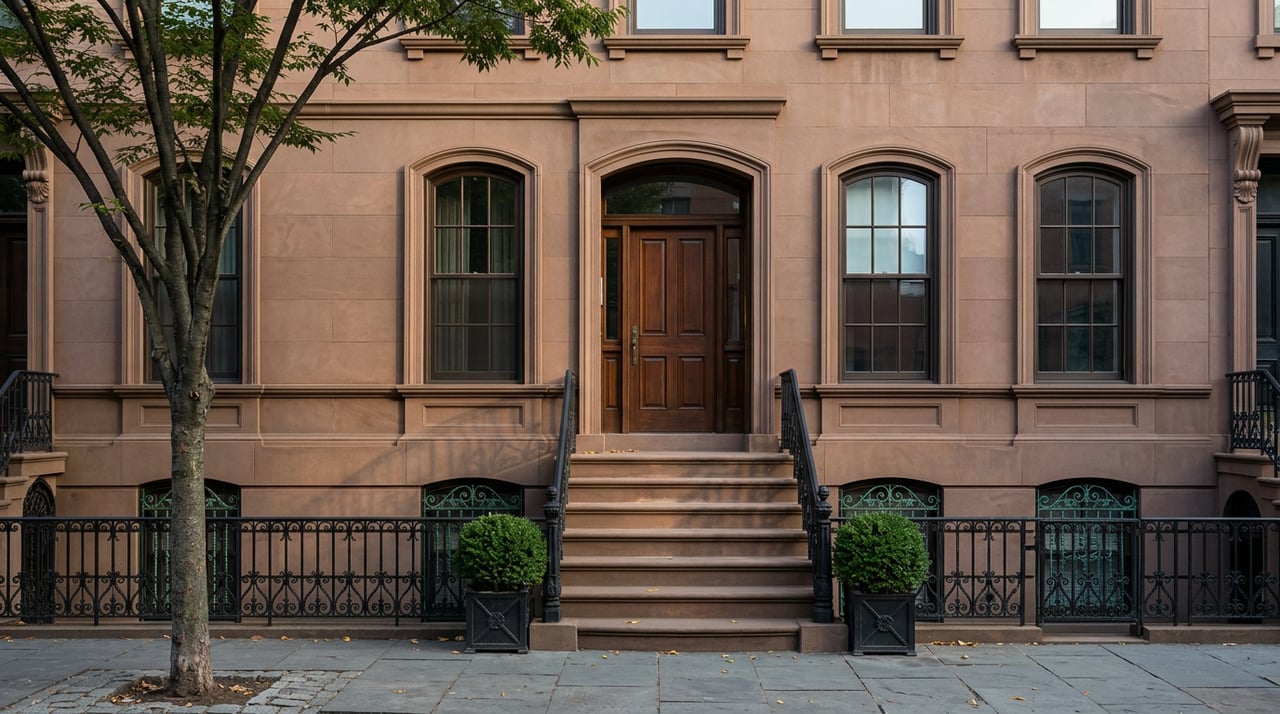
Brooklyn Heights became New York City's first historic district in November 1965, and the LPC has regulated anything visible from the street here ever since: windows, doors, stoops, cornices, masonry, rooftop additions. The Department of Buildings won't issue a permit for that kind of work until the LPC has signed off, which means the two agencies aren't running in parallel. They're running in sequence, and the LPC step comes first.
That sequencing isn't automatically slow. The Commission has three permit tracks, and they move at very different speeds:
A brownstone that needs anything beyond routine repair is very likely looking at that third track. Which means a seller who discovers a facade issue after listing, or worse, after going into contract, is trying to run a three-to-six-month approval process against a 90-day shed clock that the city is now actively enforcing.
The Commission's file on 109 State Street, a Greek Revival rowhouse at the corner of State Street and Sidney Place built in 1839, is a useful illustration of what a real Certificate of Appropriateness project involves. The rear elevation had deteriorated over the years, with crumbling masonry, failing fencing, and rusted terrace railings. The approved plan called for a new oriel window designed to match one the building had lost in an earlier renovation, an enlarged third-floor window, and a roof deck with concealed solar panels and a low bulkhead kept out of sightlines from the street. That's the level of documentation a hearing-track project requires: elevations, materials, sightline studies, and a design that reads as a restoration rather than a change.
None of that happens in a weekend. It's the kind of project a homeowner plans years ahead of a sale, not weeks before one.
Here's the part that catches sellers off guard: All Boro Expediter explains that an unresolved LPC violation doesn't expire when the property changes hands. It travels with the building. If a prior owner did unpermitted work, a new window installed without sign-off, a stoop rebuilt in the wrong material, the obligation to cure it transfers to whoever owns the property when the violation gets flagged, whether that's the seller who inherited it unknowingly or the buyer who just closed. The LPC does give owners two separate chances to correct a violation without paying a fine, but most owners burn through both before they realize what's happening, often because nobody connected the dots between an old work order and a current listing.
A buyer's attorney or title company doing routine due diligence will find an open violation. That's exactly the kind of item that can freeze a deal in its final two weeks, not because the underlying issue is unfixable, but because fixing it now has to go through the same LPC sequencing described above, at the worst possible moment in the transaction.
If you own a brownstone or rowhouse in Brooklyn Heights and you're thinking about selling in the next year, a few questions are worth answering months before you call a photographer:
None of this requires guessing. The Brooklyn Heights Association's Landmarks Committee exists specifically to help owners understand what triggers Commission review and how to prepare an application that has a real shot at moving quickly, and touching base with them early is a low-cost way to avoid finding out the hard way.
For proof that a fully cured landmarked restoration is worth the runway, look at One Monroe Place, the 1852 mansion at the corner of Clark Street that just completed a decade-long, LPC-approved restoration. The Brooklyn Heights Association is holding its 2026 Designer Showhouse there, opening to the public on October 2 after a party on September 30. It's the kind of building that spent years moving through exactly the sequencing described here, and it's now the centerpiece of the neighborhood's biggest preservation showcase of the year. That's what patience with the process buys you. It's also a reminder that the properties everyone admires in this district got there by starting early, not by rushing at the end.
Does every exterior repair in Brooklyn Heights need a public hearing? No. Routine, in-kind repairs, like replacing a window with an identical one, often qualify for the faster staff-level tracks. Hearings are reserved for changes that affect significant protected features or don't match what's on file for the building.
Can a seller just disclose an open violation and let the buyer deal with it? That's a conversation for your attorney, since the obligation to cure travels with the property regardless of who owns it when the violation is resolved. What's clear from how these deals typically unfold is that an unresolved violation discovered during closing tends to slow things down far more than one addressed ahead of listing.
If you're weighing whether to sell a brownstone or rowhouse in Brooklyn Heights this year, the facade timeline is worth a real conversation before the sign goes up, not after an offer comes in. Josie Hubschman has spent years walking Brooklyn Heights sellers through exactly this kind of sequencing, from the first landmark records check to closing day. Reach out today and let's talk through your specific property and your timeline. Let's Connect.
This article is general information, not legal, tax or financial advice. Consult a qualified professional about your situation.
Stay up to date on the latest real estate trends.


Josie is fascinated by the real estate market but understands it can feel intimidating without the right guidance. Her deep market knowledge, passion for helping others, and entrepreneurial background make her an invaluable resource for clients navigating the buying or selling process, Work with Josie today!
Get In Touch With Josie To Learn More