Cobble Hill New Construction Condos vs Brownstones: What Buyers Should Know
October 1, 2026
October 1, 2026
"There's a common belief these days that there's nowhere left to build in the city." That was The Real Deal's framing in February, reporting on a $100 million land deal that had just closed on a single Brooklyn block. The line undersells what actually happened in Cobble Hill this year. It's not that there's nowhere left to build. It's that there is exactly one place, and the developer holding the keys to it has changed twice since 2014.
If you're comparing Cobble Hill to Carroll Gardens, Boerum Hill, or Brooklyn Heights while house hunting, that single fact matters more than any median price you'll find on a portal. In most of brownstone Brooklyn, new inventory trickles in from scattered infill projects, converted buildings, the occasional teardown. In Cobble Hill, nearly all of it has to pass through one address.
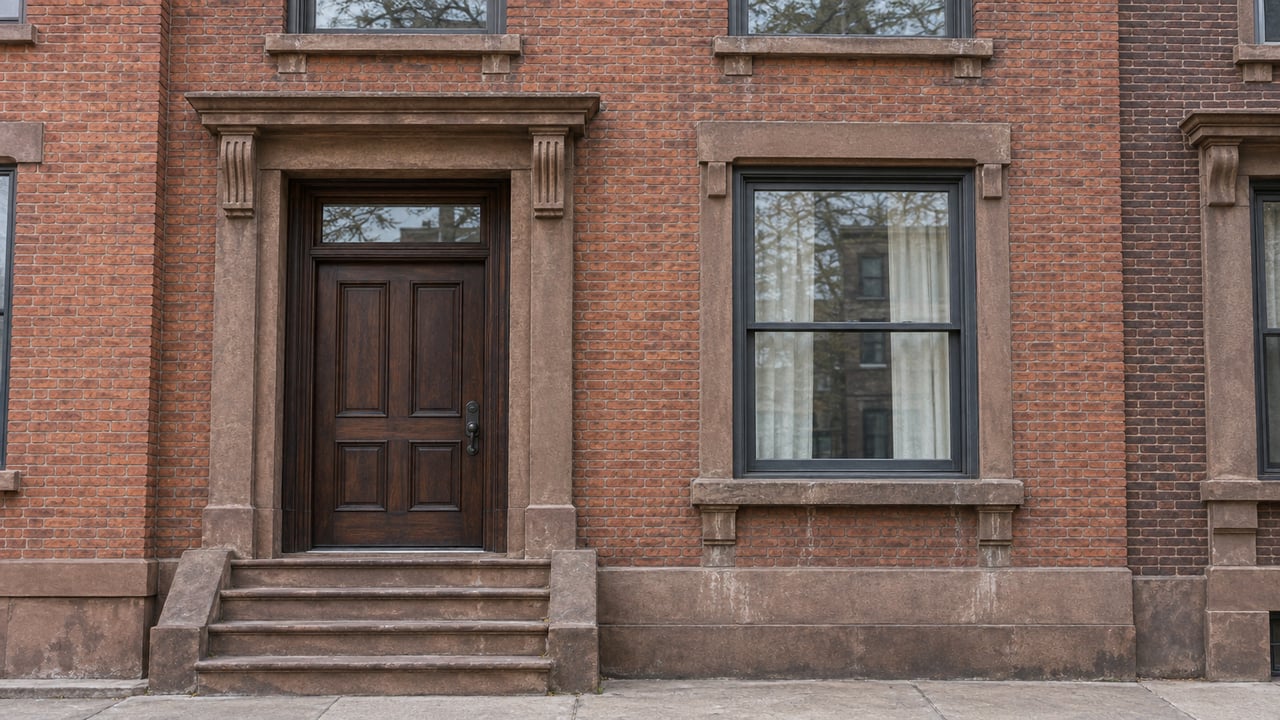
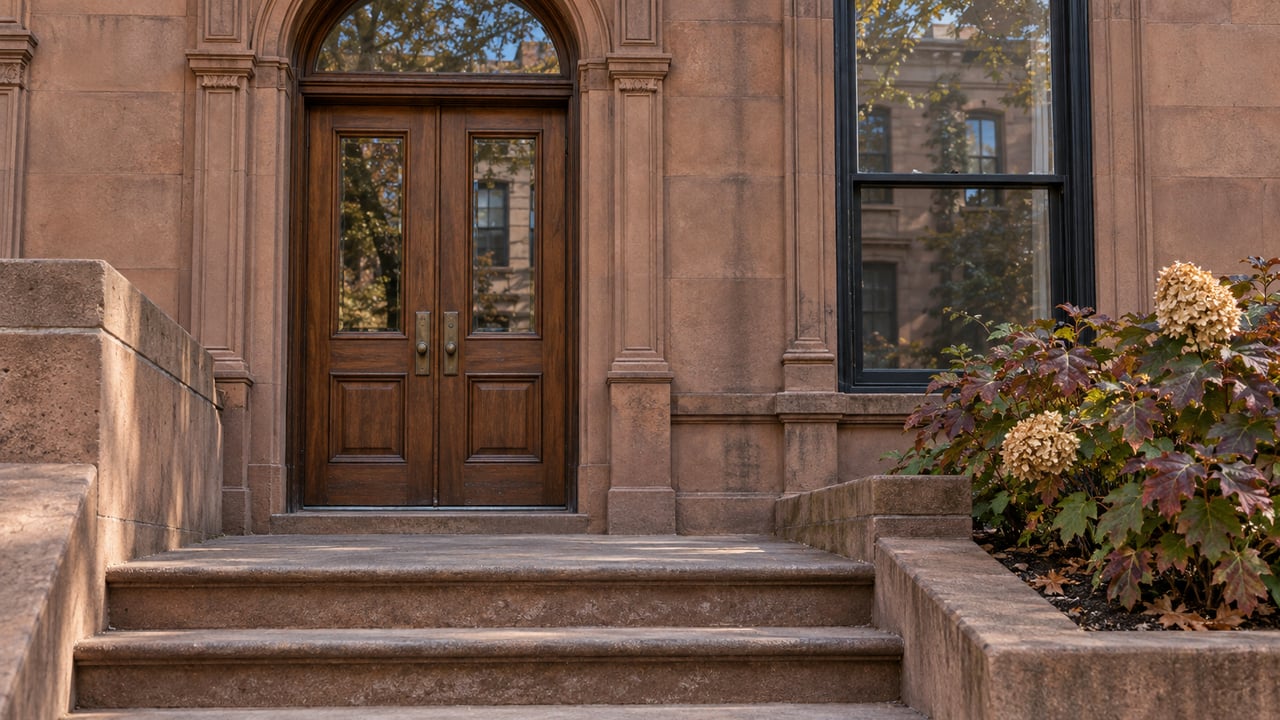
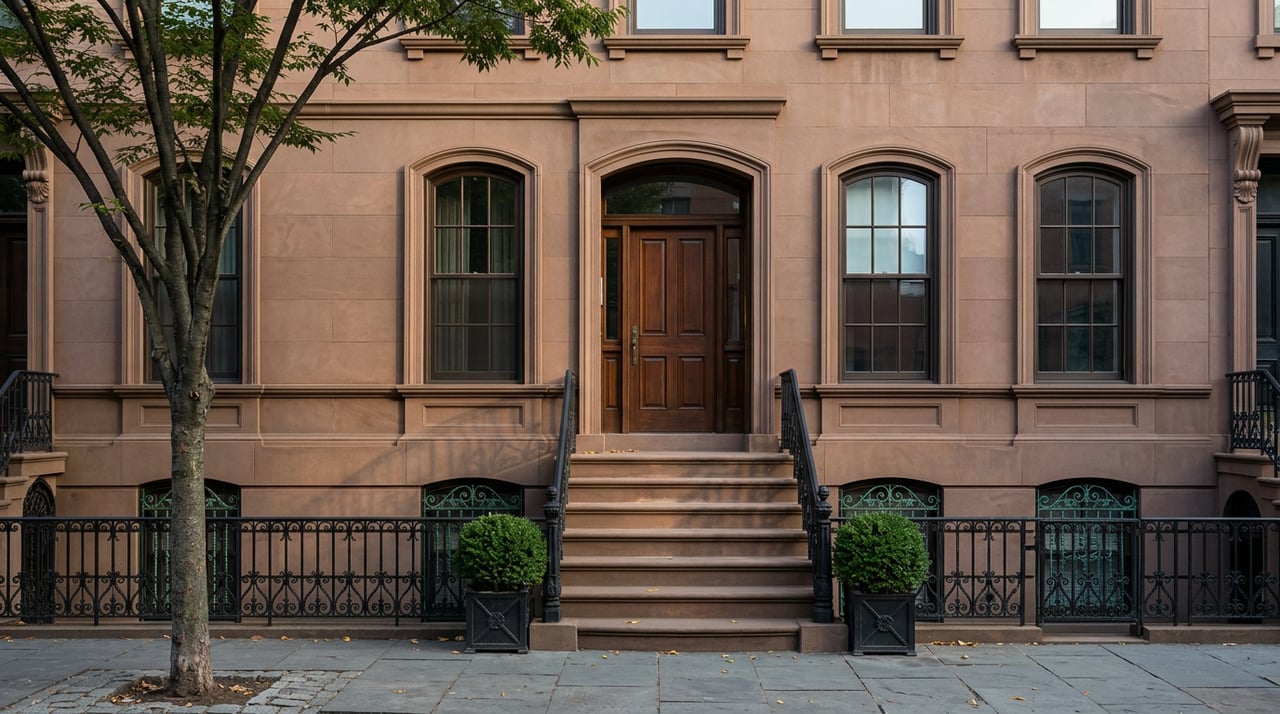
Most of Cobble Hill sits inside the Cobble Hill Historic District, landmarked since 1969 and capped at roughly 50 feet in height across the interior blocks. That designation protects the Greek Revival and Italianate rowhouses that make the neighborhood recognizable, and it also means a developer can't simply buy a townhouse and add three floors.
An analysis of city property records by PincusCo put a number on how little that leaves room for. Over the two years ending in early 2026, Cobble Hill saw only about 30,598 square feet of commercial and multifamily construction underway, roughly 2 percent of the neighborhood's total built space. Compare that to a neighborhood without a blanket historic designation and the gap explains itself. Cobble Hill isn't short on demand. It's short on legally buildable land.
That scarcity is exactly why one site carries so much weight.
The site is the former Long Island College Hospital campus, which SUNY shuttered in 2014 and agreed to sell to Fortis Property Group for $240 million, on the condition that the developer include a medical facility that NYU Langone would operate. Fortis rebranded the 18-parcel campus River Park and initially pitched a rezoning that promised affordable housing and community benefits. Neighbors and then-City Council Member Brad Lander pushed back on the scale, the rezoning stalled, and Fortis pivoted to building as-of-right instead, meaning no community approval was required.
NYU's ambulatory care center opened on the site in 2023, at 165,000 square feet. The rest of Fortis's plan did not hold together. The company defaulted on tens of millions in debt to lender Madison Realty Capital, which moved toward foreclosure on part of the site. SUNY itself terminated its agreement with Fortis in 2023 and sued over unpaid installments on the original sale.
Enter Rockrose Development, the Elghanayan family firm that builds and holds rental buildings across Manhattan and Long Island City. Rockrose picked up the first piece, 91-95 Pacific Street, for $65 million in 2024 after Madison Realty took it over from Fortis. This February, Rockrose closed on the remaining block for $100 million. The AG's approval noted two pending lawsuits tied to the site's 2015 disposition and concluded they weren't expected to derail the transfer.
Rockrose has since filed for a major alteration covering 298,322 square feet on the property, dated this April. No public building design has surfaced. Bisnow's initial coverage of the purchase noted plainly that there was no indication in the filing of what Rockrose intends to build.
The first phase of River Park did deliver. The Polhemus Residences and Townhouses, a renovated hospital building and eight new rowhouses on Amity Street, sold out at a healthy clip. Three towers followed in phase two: 1 River Park, a 15-story building with studio-to-three-bedroom units priced from the high $900,000s to over $8 million; 2 River Park, a 28-story, 475-foot tower that became the tallest building in South Brooklyn, a stretch that includes Boerum Hill, Carroll Gardens, Cobble Hill, Gowanus, Park Slope, and Red Hook; and 5 River Park, a 25-unit building that launched with a projected $78.9 million sellout, or roughly $3.15 million per unit.
Some of those units come with a specific financial detail worth knowing if you're shopping new construction here. One condo listing at 110 Warren Street, at the edge of Cobble Hill and Carroll Gardens, advertised a tax abatement.
What never materialized was the rest of the plan. Fortis's original vision for River Park included an international K-12 school and two additional towers, 3 River Park and 4 River Park, that were supposed to launch sales around 2020-21. None of that happened before the company's finances gave out. Whatever Rockrose eventually builds on the reassembled block will be a fresh decision, not a continuation of Fortis's blueprint.
While the megasite sat in legal limbo, the rest of Cobble Hill's housing stock told its own story, and it's a story about scarcity rather than growth. A renovated five-story townhouse at 205 Clinton Street has been asking $18.5 million this year, down from an initial $22 million, with no buyer yet as of this spring. If it closes anywhere near that number, it would set a new neighborhood record, surpassing the $15.5 million sale of 177 Pacific Street in 2015.
Separately, a 25-foot-wide townhouse at 128 Pacific Street sold in 2023 for nearly $12 million after a gut renovation, up from its $4 million purchase price in 2015. That's roughly a threefold increase on a single property in eight years, on a block where almost nothing new can be built around it. A comparable deal involving actors Daniel Craig and Rachel Weisz, reported at a similar price point, is part of the same run of transactions resetting expectations in the neighborhood. The Real Deal's April 2026 reporting describes Cobble Hill as still a little less expensive than neighboring Brooklyn Heights, even as prices climb.
That's the split worth understanding. The landmarked brownstone stock is appreciating because it can't be replicated. The River Park condos are competing on amenities, floor plans, and abatement schedules because they're new supply in a market that otherwise has almost none. Those are two different assets with two different reasons to buy, even though they sit a few blocks apart.
If you're weighing Cobble Hill against Carroll Gardens or Boerum Hill on the assumption that inventory will loosen up the way it might elsewhere, that assumption doesn't hold here in the same way. New units in Cobble Hill don't show up gradually as owners sell off individual lots. They show up in batches, on one site, on a timeline set by whichever company currently controls that block. For most of the last decade, that company was Fortis. Now it's Rockrose, and the plans aren't public yet.
For buyers focused on the existing brownstone and co-op stock, the practical takeaway is that price growth here has less to do with the broader Brooklyn market and more to do with a fixed ceiling on what can be added to the neighborhood at all. That's worth keeping in mind if you're also looking at a neighborhood like Carroll Gardens, where a similarly capped inventory has produced its own version of this story.
If a version of River Park's next phase does move forward, it will be the only meaningful lever on Cobble Hill's housing supply for the foreseeable future. Everything else is essentially fixed.
Does the Cobble Hill Historic District cover the whole neighborhood? Most of the neighborhood's interior blocks fall within the landmarked district, which is why teardowns and additions are rare compared to non-landmarked parts of Brooklyn.
Is Rockrose building condos or rentals on the former LICH site? As of this year's filings, no public design or unit breakdown has been released. Rockrose's portfolio leans heavily toward rental buildings in Manhattan and Long Island City, but nothing about this site has been confirmed.
If you're weighing a purchase in Cobble Hill against another brownstone Brooklyn neighborhood, the supply story matters as much as the price tag. Josie Hubschman can walk you through what's actually available on either side of that scarcity line, and what it means for your offer.
This article is general information, not legal, tax or financial advice. Consult a qualified professional about your situation.
Stay up to date on the latest real estate trends.


Josie is fascinated by the real estate market but understands it can feel intimidating without the right guidance. Her deep market knowledge, passion for helping others, and entrepreneurial background make her an invaluable resource for clients navigating the buying or selling process, Work with Josie today!
Get In Touch With Josie To Learn More