Carroll Gardens Home Prices in 2026: What's Really Driving Them?
September 3, 2026
September 3, 2026
Did Carroll Gardens home prices double in 2026, or did they fall?
Both claims are true, pulled from the same public sales records, about the same forty-block neighborhood, months apart. In February 2026, Redfin's neighborhood snapshot put the median sale price at $2.5 million, down 10.7 percent from the year before, with homes sitting on the market for 50 days instead of 35. By the second quarter of 2026, BKReader's coverage of PropertyShark's report on New York City's fifty most expensive neighborhoods described Carroll Gardens' median as $2.68 million, roughly double what it had been a year earlier and the sharpest jump of any neighborhood the firm tracked, moving Carroll Gardens past every other Brooklyn zip code and into the No. 4 spot citywide.
Neither number is wrong. Both are measuring something narrower than most readers assume: not the market as a whole, but whichever handful of properties happened to close in that particular window.
PropertyShark's own explanation for the Q2 jump names the driver directly: three units at 238 Degraw Street sold that quarter for between $2.35 million and $4.49 million. Carroll Gardens sees a small number of closings in a typical month. A single building trading three units at once is large enough, relative to that small sample, to move the whole neighborhood's median on its own.
The same pattern shows up earlier in the year. Brooklyn Bridge Parents' writeup of PropertyShark's Q1 2026 report put the median at $2.31 million, up somewhere between 67 and 80 percent year over year depending on which of PropertyShark's own comparisons you read, and again pointed to the cause: two single-family homes that sold above $5 million. Pull those two sales out of the count and the quarter looks entirely different.
This is not a one-quarter fluke. PropertyShark's by-property-type breakdown for March 2026 shows the same thinness. Only seven properties traded that month, itself a 133 percent jump from the same month a year earlier, when apparently just three closed. Townhouse medians sat close to flat year over year at $5.5 million. Condo medians ticked up a modest 3.7 percent to $2.1 million. Co-op medians, on the other hand, jumped 118.5 percent to $1.8 million, a swing driven by a handful of transactions in a category where Carroll Gardens simply doesn't have many units to sell in the first place.
None of these numbers describe appreciation the way a stock index describes appreciation. They describe which specific addresses happened to close.
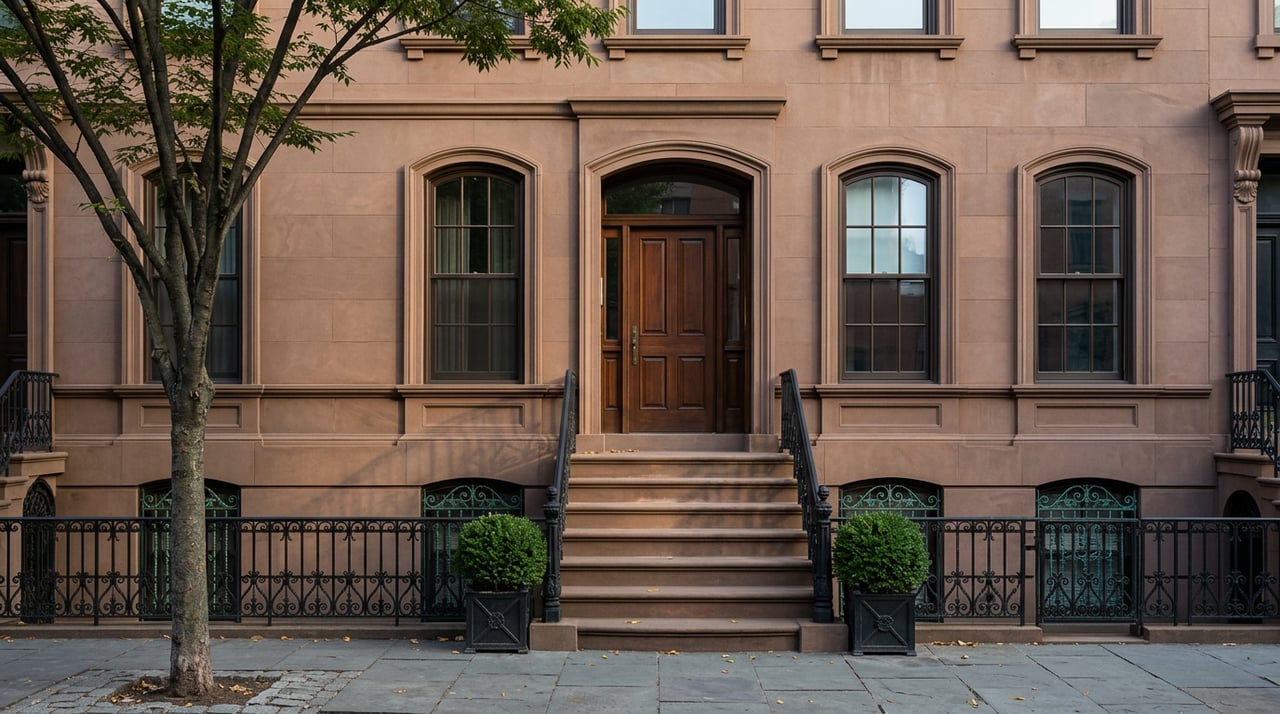
Carroll Gardens can't dilute a big sale the way a larger neighborhood can, and the reason traces back to its layout. The historic core, designated a New York City landmark in 1973 and added to the National Register of Historic Places a decade later, is a compact rectangle bounded by Carroll, President, Smith, and Hoyt Streets, built out almost entirely between 1869 and 1884. The houses inside it were laid out under an 1846 plan by surveyor Richard Butt, with different historical accounts putting the resulting front yards anywhere from roughly 25 to 45 feet deep, a scale unusual anywhere else in Brooklyn and the origin of the neighborhood's name.
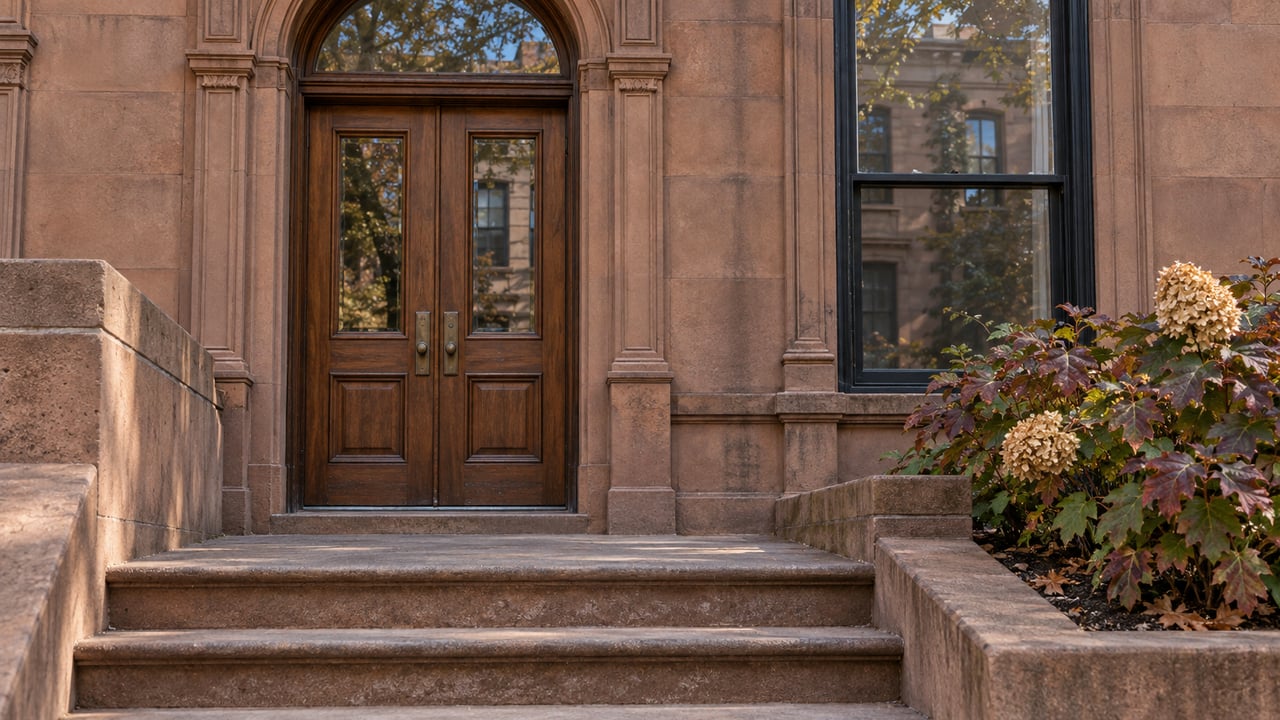
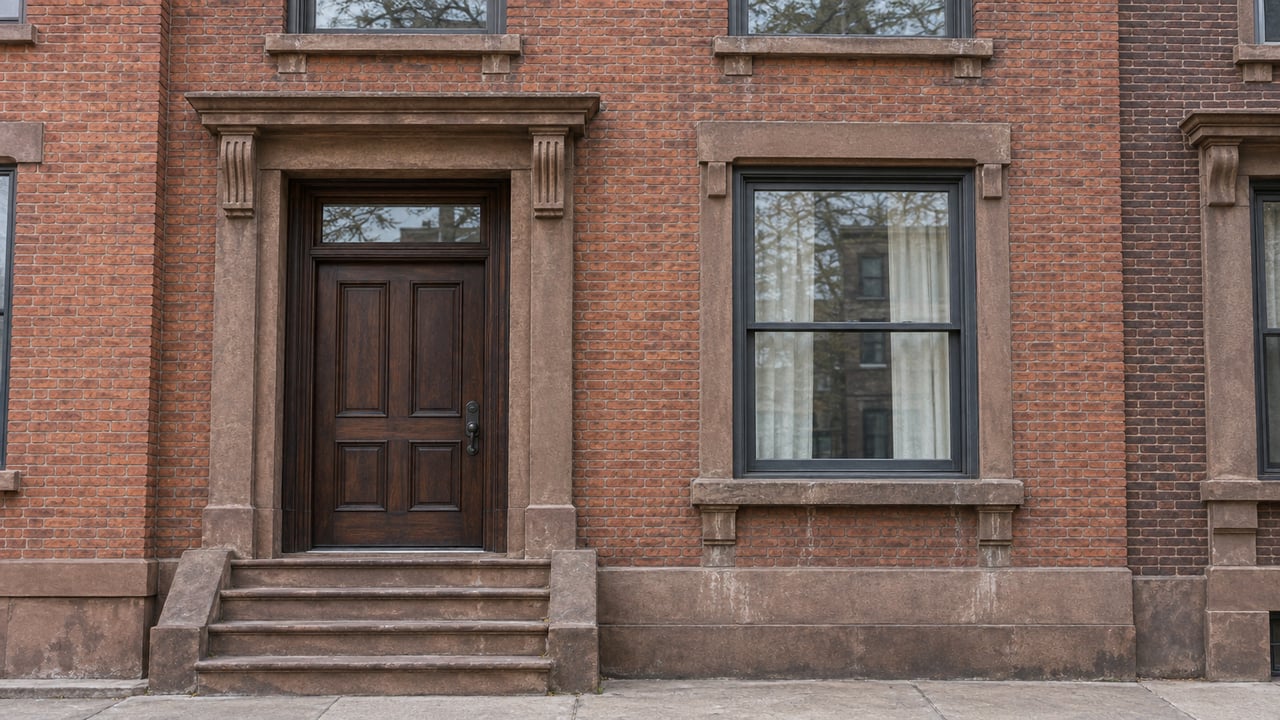
Front yards that size do more than create the district's tree-shaded look. They cap what a given lot can become. One Carroll Gardens gut renovation account makes the point plainly: even the front door had to be custom matched to the historic original and finished in an LPC-approved color before the project could get sign-off. That's a real cost and timeline difference between a landmarked brownstone and a comparable house two neighborhoods over, and it's one reason inventory here turns over slowly no matter how strong demand runs.
The effect compounds when a property headed for redevelopment gets pulled back into the protected stock instead. The former Hans S. Christian Memorial Kindergarten at 236 President Street was slated for demolition to make way for a six-story condo building before neighbors and preservationists pushed for individual landmark status, which the Landmarks Preservation Commission ultimately granted for the building's Beaux-Arts architecture and its history as Brooklyn's first freestanding kindergarten. The site stayed a single low-density home instead of turning into new multi-unit supply, the opposite of what usually happens to redevelopment candidates in denser parts of the borough.
A blended median across townhouses, condos, and co-ops in a market this small tells you almost nothing about what your specific property, or the specific property you're bidding on, is worth. The by-type numbers matter more than the headline. A $5.5 million townhouse median and a $1.8 million co-op median aren't describing the same buyers, the same inventory, or the same competition.
A few things worth checking before you anchor to any single number quoted at you:
| What to check | Why it matters here |
|---|---|
| Property type of the comps | Townhouse, condo, and co-op medians moved in three different directions in the same reporting period |
| Landmark status | Landmark status can affect renovation timeline and cost |
| Days on market trend | A single quarter's median can swing on one closing, but a shift from 35 to 50 days is a steadier signal |
Confirming that a house's paperwork matches how it's actually being used and marketed is standard due diligence anywhere, but it carries more weight in a neighborhood built almost entirely before certificates of occupancy were routine.
Carroll Gardens isn't going to solve its own volatility by adding supply. The same landmark protections and deep-lot layout that make the streetscape distinctive also mean the neighborhood can't casually build its way to a bigger, more liquid sales sample. That's part of what keeps it desirable, and it's exactly why any single quarter's median deserves a second look before you treat it as a verdict on where the market stands.
Does landmark status make a Carroll Gardens home harder to sell? Nothing in the data above points to landmarking as a drag on value. Townhouse medians in the historic core stayed comparatively strong even in quarters when the broader neighborhood median swung sharply. What landmark status changes is the process and timeline for exterior renovation, which is worth planning around rather than treating as a warning sign.
What should I check before renovating a property with landmark status? Check with the Landmarks Preservation Commission about a specific address and renovation plans.
Why did co-op prices swing so much more than townhouse prices in the same reports? Carroll Gardens simply has far fewer co-op units than townhouses to begin with, so a small number of co-op closings can move that category's median by triple digits in percentage terms even when the actual dollar amounts involved are modest.
If you're trying to make sense of what a specific Carroll Gardens listing, or your own home, is actually worth against this backdrop, Josie Hubschman can walk through the real comparables for your property type and block. Start with a home valuation or browse the Carroll Gardens neighborhood guide for more on the area. Let's Connect.
This article is general information, not legal, tax or financial advice. Consult a qualified professional about your situation.
Stay up to date on the latest real estate trends.


Josie is fascinated by the real estate market but understands it can feel intimidating without the right guidance. Her deep market knowledge, passion for helping others, and entrepreneurial background make her an invaluable resource for clients navigating the buying or selling process, Work with Josie today!
Get In Touch With Josie To Learn More